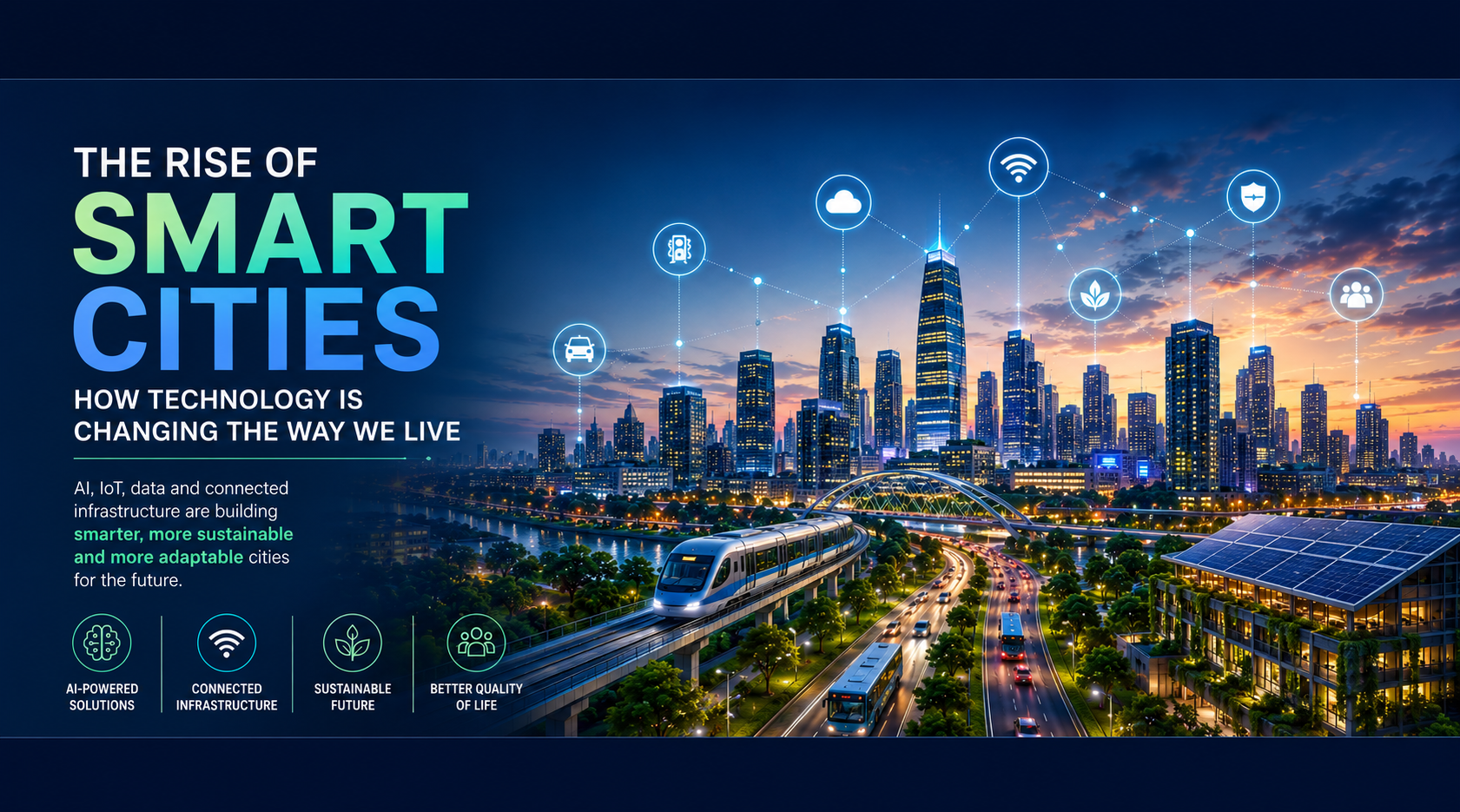
The Rise of Smart Cities: How Technology Is Changing the Way We Live
Cities are getting more connected than they have ever been. The population growth of urban areas is increasing technological advances are aiding cities in tackling issues like traffic congestion, the consumption of energy, public safety and infrastructure.
This is fueling the development in intelligent cities--urban cities that make use of technology that include Artificial Intelligence (AI), the Internet of Things (IoT) and data analytics in order to better the ways that people live and interact with their environment.
Smarter Transportation
Traffic management is among the most prominent uses of technology for smart cities. AI-powered devices can analyze current traffic conditions in real-time and to improve the efficiency of traffic signals and transport routes.
Connected systems are also able to provide current information regarding roads, public transport as well as parking options, making everyday travel easier.
AI and Connected Infrastructure
AI and IoT can help cities gather and process data gathered from the connected infrastructure.
Smart sensors are able to be used to monitor air quality, traffic use, and energy usage as well as infrastructure that is public. These data will help local authorities spot issues faster and take better-informed choices.
In particular, intelligent infrastructure can spot maintenance issues earlier as well as help reduce the risk of unexpected failures and enhance the performance of services provided by the public.
Sustainable Energy and Resources
Smart cities are focused on the environment.
The connected energy system can control electricity consumption and increase efficiency in energy use. Smart lighting, smart buildings, and smart energy management systems can cut down on excessive consumption.
Technologies can help improve recycling, water consumption and monitoring of environmental impact.
Improving Public Services
The use of data-driven technology has helped public institutions become more responsive.
Information in real-time can help with emergencies, infrastructure management as well as urban planning. When you know the way resources are used cities can take better choices regarding development, transportation and other public services.
Challenges Ahead
Smart cities can provide significant potential, they also bring difficulties.
Security, privacy and access to information are all issues that must be addressed. When more and more infrastructures are connected safeguarding systems and making sure that technology is beneficial to everyone is crucial.
Conclusion
Smart cities go beyond focused on introducing more technology into urban spaces. The goal is to develop better, more sustainable, and sustainable communities.
In the coming years, with AI, IoT and connected infrastructure continuing to advance technology is set to become more important in the shaping of cities of the future.
The city of the future is getting more intelligent and connected through each new technology.